

Guernsey is is one of the smaller Channel Islands but was fortified during the French Revolutionary Wars. This included thirteen infantry loop holed towers and coastal defence batteries, very similar to those in Jersey.
GUERNSEY FORTIFICATIONS
A total of fifteen towers were built in Guernsey between 1788 and 1790. As with Jersey, these were know as the Conway Towers after the Governor of that time. They were intended for use by infantry with muskets to combat any landings in areas with beaches suitable for landings. The towers in Guernsey were built without any machicolations on the top level, unlike Jersey where they usually had four.
Of the fifteen towers built, some twelve have survived until 2024. These full list of the towers:
Tower 1, Hougue à la Perre Tower at St. Sampson, LOST
Tower 2, Hougue à la Perre (Belle Greve) at Saint Sampson, LOST
Tower 3, Mont Crevelt Fort, at St Sampson.
Tower 4 neat Fort Le Marchant in Vale.
Tower 5, L’Ancresse Bay, in Vale.
Tower 6, ’Ancresse Common, Vale.
Tower 7, L’Ancresse Common, Vale
Tower 8, L’Ancresse Common, Vale, LOST
Tower 9, Bay de la Jaonneuse, Vale
Tower 10, Chouet, Vale.
Tower 12, Vazon Road in Castle,
Tower 13, Petit Bôt Tower,at Forest
Towe 14, Saints Bay, at St Martin.
Tower 15, Fermain Tower and battery, at St Martin.
Plans indicate that these infantry towers with loopholes were built with three floors.
- The first storey had a wooden floor, entrance doorway and eleven loopholes.
- The second story had a wooden floor, sleeping accommodation and twelve loopholes.
- The roof or cover was accessed through a central hatchway and provided additional firing positions over a parapet. Carronades were later mounted.
When built the infantry towers had no artillery on the roof but from 1803, the towers had their roofs strengthened and a 12-pdr SB carronades was mounted.
By 1833 there was an intention to upgrade these to 18-pdr carronades on the small tower in Jersey.
32-pdr Carronade
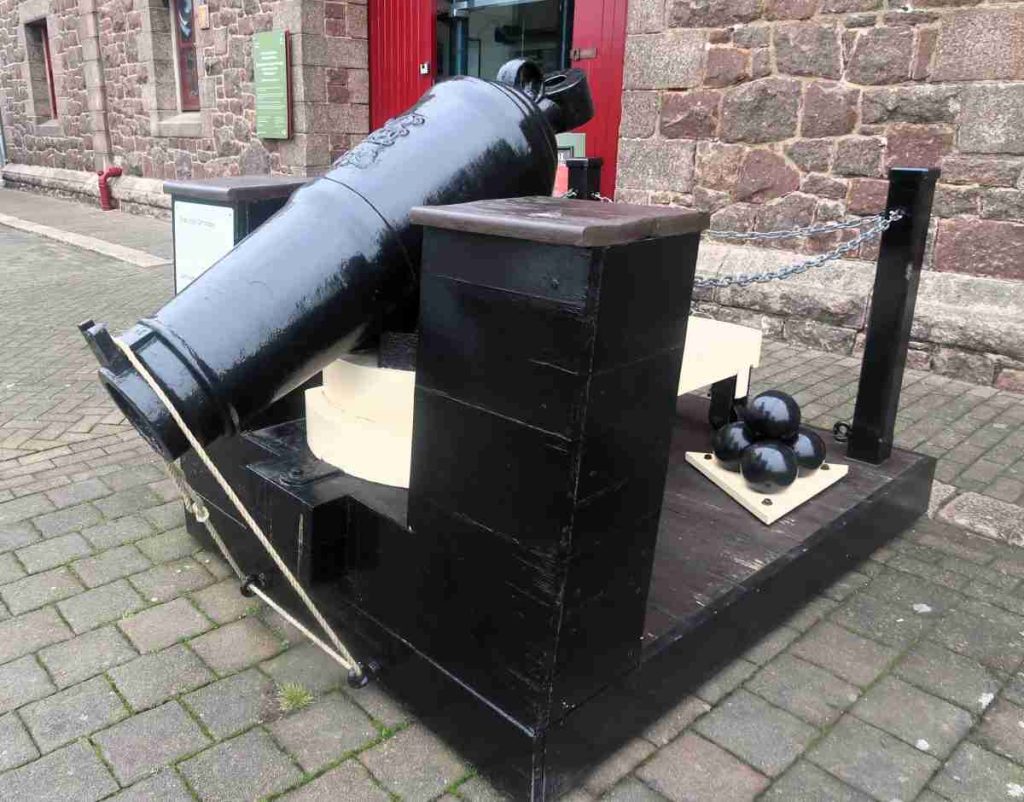
In 1803 three Martello Towers were built in Guernsey which all survive although Fort Saumarez was heavily modified by the German occupiers. The three Martello Towers were located at:
'S' BOUNDARY STONES
S BOUNDARY STONE
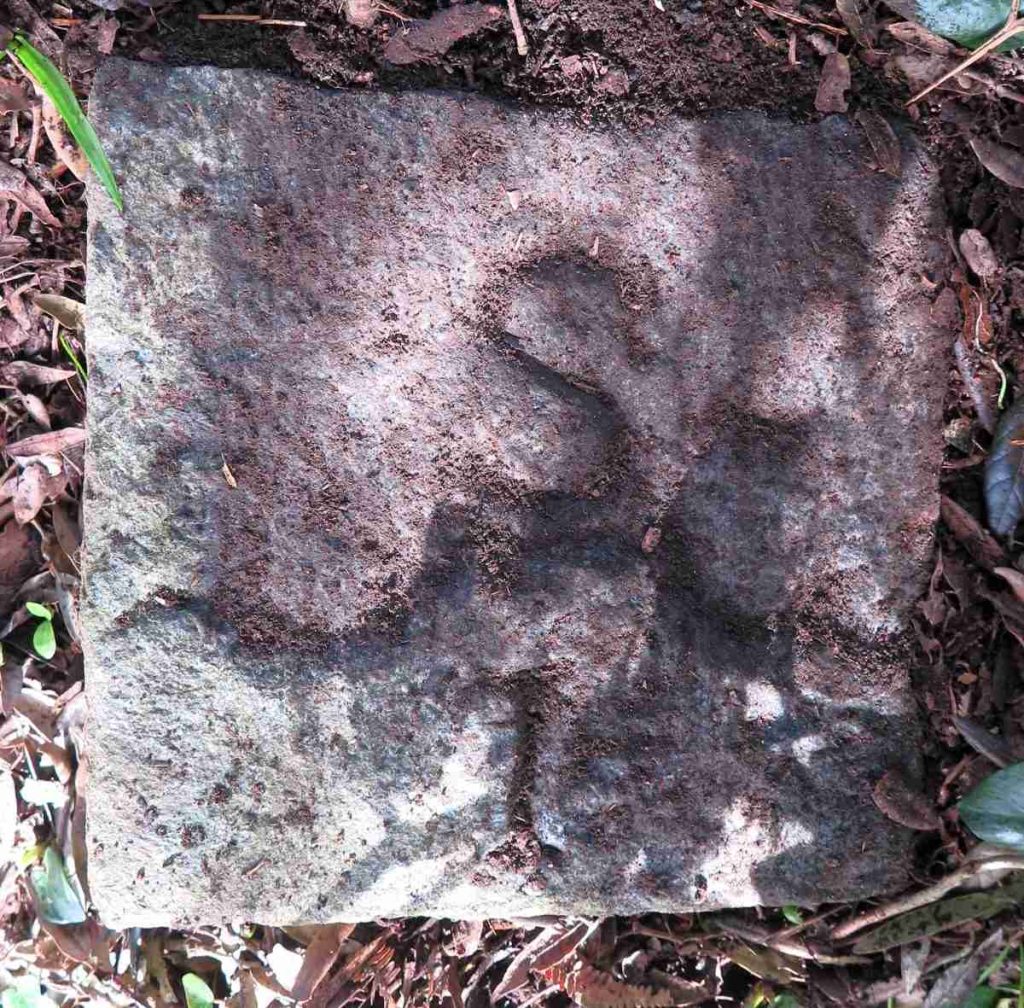
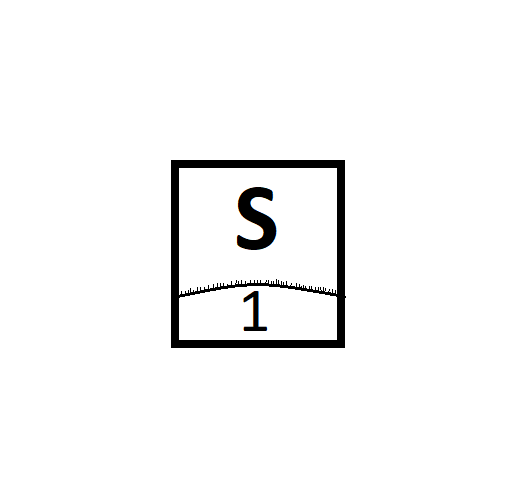
Field visits in Guernsey have revealed a number of Boundary Stones at coast defence batteries used by the Guernsey Militia. The stones are smaller than the usual WD Boundary Stones, and are generally simple in design. The have a single large ‘S’ at the top and then a single number. The number and the adjacent sides are sometimes slightly raised from the top half of the stone with the ‘S’. See illustrations on the left and right.
The Imperial Government used the Guernsey Militia and a cheap option for a garrison on the Island, and it is believed that many batteries were build by the States Government. The local government therefore provided the land and the bulk of the soldiers to crew the batteries. It is assumed that the ‘S’ is for STATES. Contemporary plans show that these are boundary markers which could date back to 1750. It is noted that ‘BO’ and ‘WD’ boundary stones to appear at some batteries, presumably those with regular British artillery manning them.
For more on Boundary Stones, see HERE.
SKETCH OF S STONE
Armament Returns for Guernsey (TNA WO 78/5092) show two Defence Electric Lights mounted on Castle Cornet. The Port War Signal station (PWSS) was on the Northern Bastion of Fort George.
The returns provide the following information:
1914 with two 6-inch Q.F. guns at Fort Irwin and one 6-inch Q.F. gun in reserve.
There is no mention in this return of the various field guns that appeared in the 1905 return.
1905 Two 6-inch Q.F. guns at Fort Irwin, although not yet mounted. Tow 12-dr guns in the Cavalier Battery at Castle Cornet.
For general defence the armament included :
Six 5-inch howitzers
Four 12-pdr BL field guns
Nine 16-pdr RML field guns
Six 9-pdr RML field guns
21 Machine Guns